


Digital Innovation Collaborative Exchange
Who we are and what we do
The Digital Innovation Collaborative Exchange (DICE) is a regional effort to bring reliable, affordable digital services to local governments in Southwest Michigan. Built through an intergovernmental partnership between Van Buren and St. Joseph Counties, DICE was created to help rural communities modernize their operations in a way that makes sense: first by simplifying their systems, then by using technology to improve them.

AI & Workflow Automation
Augmenting capabilities, increasing efficiencies.

Digital Comms & Web Development
Clear, accessible, and AI-ready.

Data Analytics & GIS
Turning local data into actionable insight.

Simple apps that make government easier for staff and residents alike.
The Challenge vs. The Solution
Local governments across Michigan are facing more digital demands without the staff, funding, or tools to keep up.
We provide a sovereign alternative to the vendor trap.
Current Challenges
The Rural Tech Deficit
A widening gap between well-funded urban centers and smaller communities hurts local economic competitiveness.
The Vendor Trap
Traditional software is frequently overbuilt, over-priced, and locks counties into rigid, proprietary platforms.
The Danger of Unchecked AI
Using expensive technology to permanently lock in inefficient legacy workflows creates existential trust risks.
Our Solution
A Shared Digital Public Utility
Pooling resources through interlocal agreements allows small jurisdictions access to advanced digital capabilities.
Subtraction & MicroTools
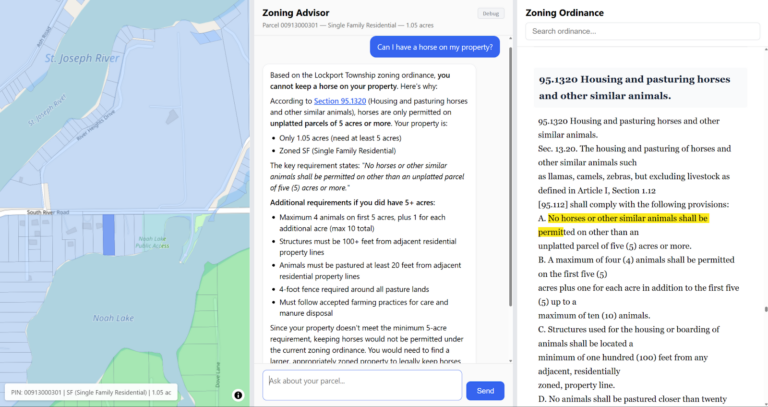
We fix broken processes before applying tech, deploying modular publicly owned tools tailored to local ordinances.
AI With Integrity & Oversight
We enforce the “Human Judgment Rule,” ensuring AI only assists while humans maintain final authority.
Our Case Studies
Real change is measured in hours saved, dollars preserved, and residents better served.




Web Design
Websites as a digital asset

AI Policy & Training
Leading digital innovation

AI Integration
Augmenting staff capabilities
Join the Work
Whether you are a local government, a regional partner, or an interested peer, there is a place for you in the DICE ecosystem. Let’s talk about shaping the future of public-sector technology together.
Subscribers
Access our full suite of public-sector MicroTools.
Pilot Partners
Collaborate on foundational R&D projects.
Policy Advisors
Shape regional AI governance frameworks.
Funders
Invest in digital infrastructure modernization.
Latest Insights

Shaping the Future of Local Government AI: Michigan Communities Connect and Innovate
Local governments are working hard to keep up with the fast pace of artificial intelligence. To help with this…
Stop Banning AI. Start Owning It.
How Van Buren and St. Joseph Counties are building a sovereign AI architecture for local government. How Van Buren…

There is no Shapefile: Why AI Vendor Lock-In Is Different This Time
The Lessons of the Digital Parcel Map In the 1980s and 90s, counties across the country took their first…
Newsletter Updates
Enter your email address below to subscribe to our newsletter.